

Understanding the potential impact of a medical intervention is an essential step in its development. For IIAT, this means not only designing devices that function in low-resource environments, but also evaluating how those devices translate into improved health outcomes.
In this case study, we outline how we approach impact modelling for our phototherapy unit — and how accessible, locally produced technologies can lead to measurable reductions in mortality and long-term disability.
From Clinical Need to Quantifiable Outcomes
Neonatal jaundice is one of the leading causes of infant hospitalisation, affecting roughly 60% of newborns globally. While it is highly treatable, limited access to functional phototherapy in low-resource settings leads to preventable deaths and long-term complications.
From the outset, our goal was not only to build a device, but to understand its real-world impact — how many patients could be treated, and what outcomes could be achieved in practice.
Building a Conservative Impact Model
To estimate impact, we developed a simple operational model linking device usage to clinical outcomes.
In our current base case:
- A single phototherapy unit treats approximately 68 newborns per year (at 40% occupancy)
- This corresponds to roughly one infant death averted per device-year
- Including long-term outcomes, this translates to approximately ~85 DALYs averted per year
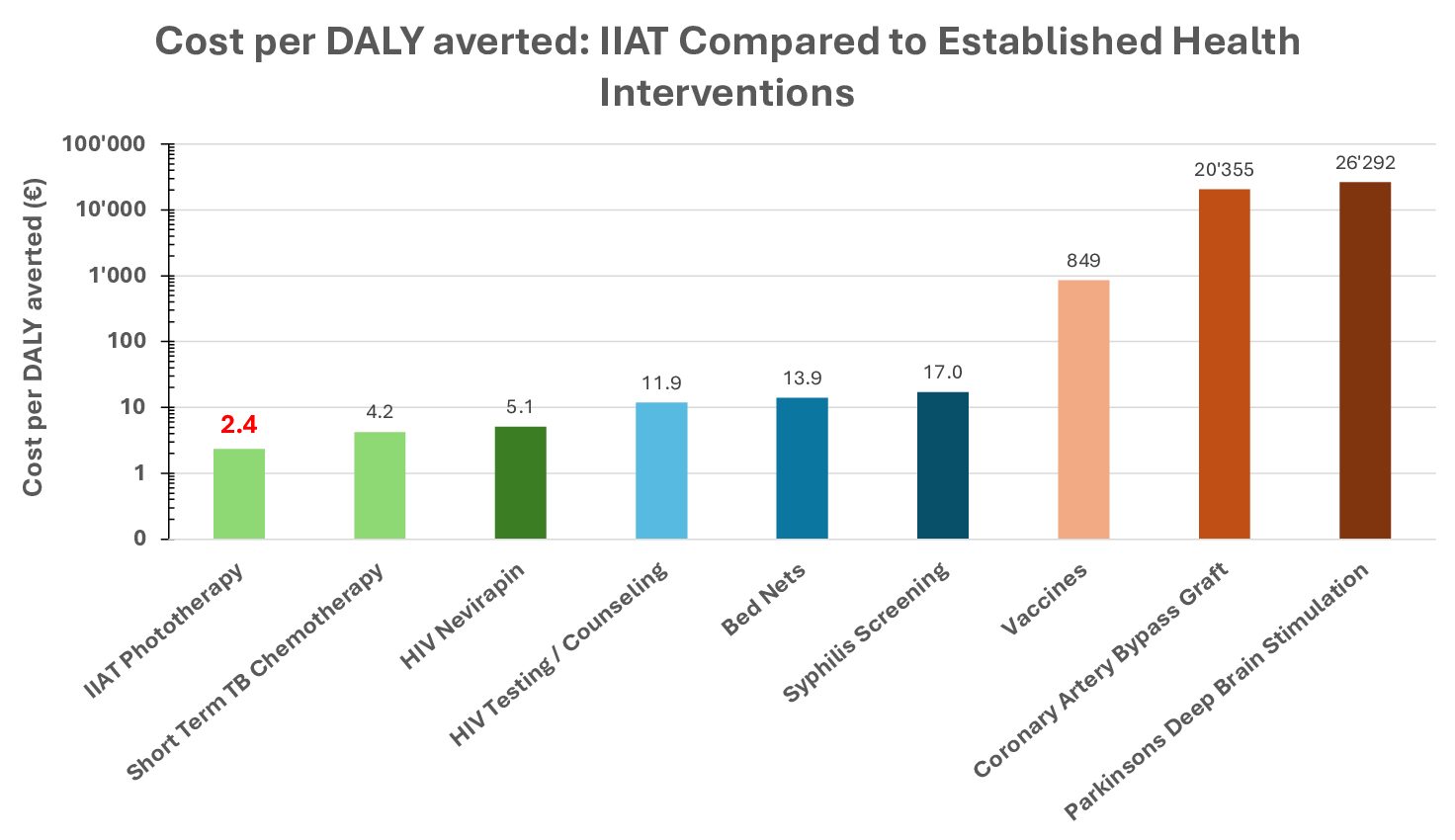
At scale, this represents one of the most cost-effective life-saving neonatal interventions currently modelled (2.48 € / DALY averted), while simultaneously building local technical capacity.
These estimates are intentionally conservative and based on realistic usage scenarios rather than idealised conditions.
Scaling Impact Through Local Production
Rather than distributing isolated devices, IIAT focuses on enabling local production through small-scale engineering labs.
In a representative scenario:
- One lab can produce up to 100 devices per year
- Over time, this leads to a growing base of functioning devices within local healthcare systems
- At scale, this corresponds to:
- tens of thousands of newborns treated annually
- hundreds of lives saved per year
- substantial cumulative reductions in disability and mortality
This approach shifts the focus from individual interventions to system-level impact.
Why Measuring Impact Matters
For many global health initiatives, impact is often assumed rather than quantified. At IIAT, we see impact modelling as an essential part of the design process.
It helps us prioritise high-impact interventions, design for scalability, and communicate clearly with partners and supporters.
More broadly, it reflects a core principle of our work:
Accessible medical technology is not only about reducing cost — it is about maximising meaningful health outcomes.
Looking Ahead
As our phototherapy pilot progresses in the Republic of the Congo, we will continue to refine these estimates using real-world data. At the same time, we are applying this impact-driven approach to future projects, including low-cost diagnostic technologies.
By combining engineering, local collaboration, and measurable outcomes, we aim to build systems that can deliver lasting improvements in healthcare access.
📩 Interested in learning more?
We welcome discussions on our modelling framework, underlying assumptions, and opportunities for collaboration in impact evaluation and clinical validation.
For further information, please contact us at info@accessible-tech.ch.